What is Classical Christian Education?
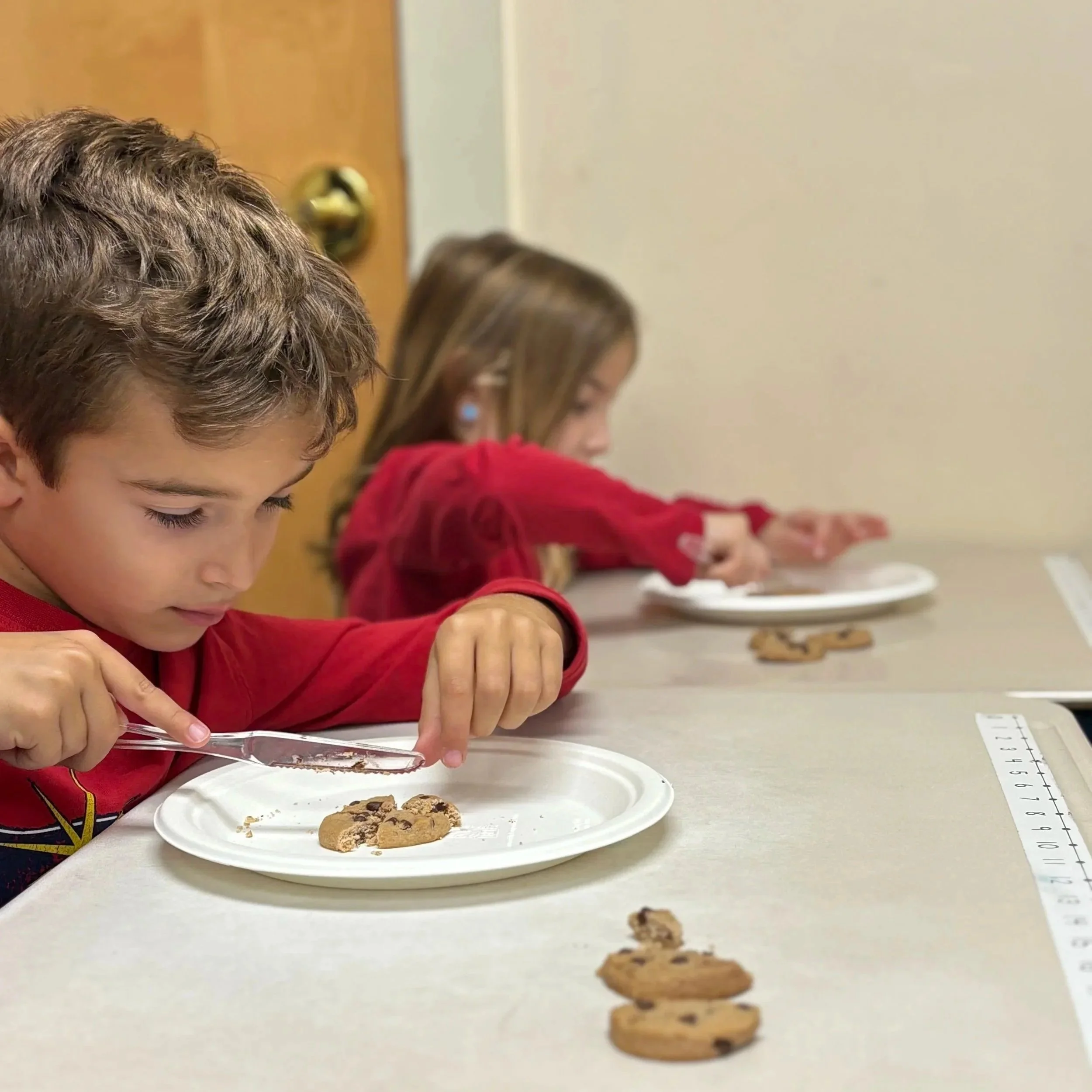
Classical Christian Education is an approach to learning that seeks to form the whole person—mind, body, and soul. Built on the enduring tradition of the Trivium, it guides students through the stages of grammar, logic, and rhetoric, training them to think critically, reason clearly, and communicate with wisdom and eloquence.
Rather than treating knowledge as an end in itself, Classical Christian Education integrates every discipline into a greater whole, cultivating virtue, curiosity, and a love of truth. Rooted in a Biblical worldview, it aims not only to prepare students for academic success, but to equip them to live lives of purpose, integrity, and faith.
What are the Liberal Arts?
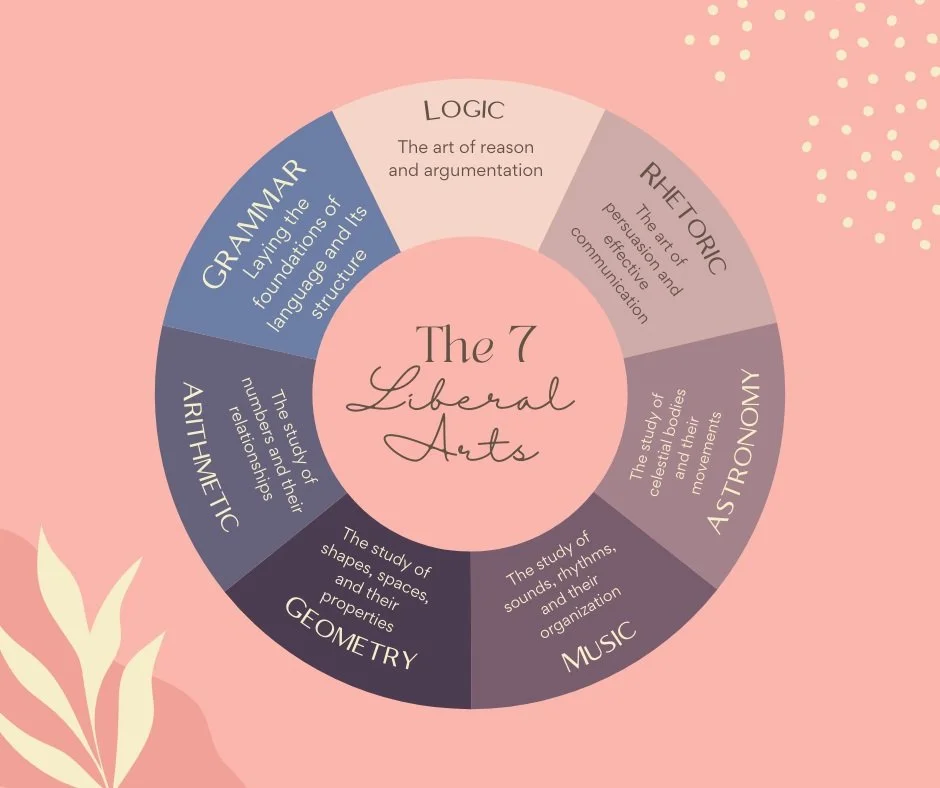
Classical Education incorporates elements of the Trivium (The Arts of Language - Grammar, Logic, and Rhetoric) and the Quadrivium (The Arts of Number - Arithmetic, Geometry, Music, and Astronomy). Together, these two sets of subjects make up the study of the seven Liberal Arts (listed below).
If we zoom out and look at how each of the liberal arts, together with the elements of virtue formation, come together to create a beautiful picture of how a person’s foundation of education contributes to their formation of identity and what it means to be human in this world. This picture features how the parts come together as a whole. If this process is cultivated with curiosity and joy, it ideally results in a lifelong love of learning.
What is Virtue?
An excellence question! We are so glad you asked! A step beyond moral character development, virtue focuses on the formation of the soul. It’s not a pattern of correct behavior in an of itself, but rather, a deeply grounded commitment to living out Goodness that results from entering The Great Conversation and wrestling with big, meaningful questions such as: Who is God? Who I am in relation to God? What is my purpose on this earth? What is the best way for me personally to show up and engage this life?
The four Cardinal Virtues are Prudence, Justice, Fortitude (or courage), and Temperance. Other virtues incorporated in the classical framework are Wisdom, Wonder, Truth, Goodness, Beauty, Discipline, Responsibility, Diligence, and Service.
Within the Classical Christian model, we include faith-inspired virtues such as Humility, Kindness, Patience, Faith, Hope, and Love.
Classical education v. Classical Christian education
-

Classical education
Classical education is a liberal arts approach to learning that is rooted in ancient history aiming to develop critical thinking skills, cultivate wisdom, practice eloquence in communication, and foster a deep appreciation for the arts and humanities.
Traditional education teaches students WHAT to learn
Classical education teaches students HOW to learnWant to delve deeper?
The Classical Academy has a great defining article here, highlighting each part of the Trivium (Grammar, Logic, and Rhetoric) and its significance in this education model.Classical Academic Press has a great description with links to other enlightening resources here.
-

Classical Christian education
Essentially, Classical Christian Education (CCE) is a liberal arts education from a Classical approach with Jesus at center. Therefore, CCE stands grounded in Biblical truth, flowing outward, permeating every other aspect of this educational approach with sacred purpose.
Are Classical and Christian approaches to education compatible? An excellent and poignant question! Classical Conversations shares some insight here.
Wondering about how Classical Christian schools differ from conventional Christian schools? The Classical Difference organization features ten key contrasts here.
What is Classical Christian Education?
The Society for Classical Learning shares insight into what it means to approach education from a Classical perspective. Pulling on wisdom from the great thinkers of the past, the Classical approach to education focuses on formation of virtue alongside head knowledge which results in a well-rounded human
How does Classical Christian education differ from modern education?
Classical Academic Press created this poignant little animated video that captures the core of the CCE model really well. It outlines how the purpose of education has shifted away from “What does it mean to be human?” over the past couple of millennia and now aims to answer a different question entirely. Check it out!